
Haryana’s 132 MLD Sewage Treatment Push: What It Means for Wastewater Management
September 21, 2026
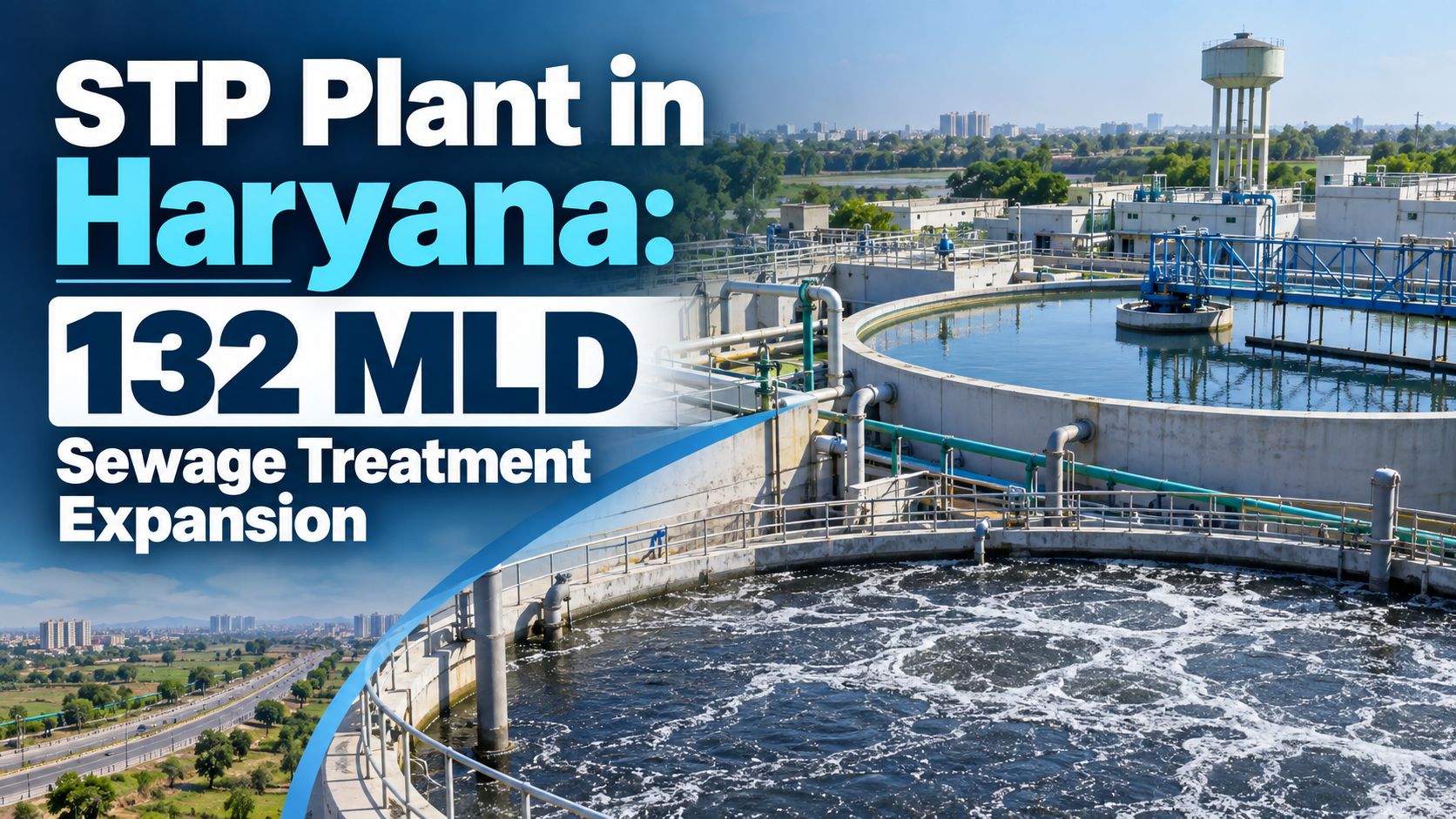
Haryana is strengthening its sewage-treatment infrastructure as cities and developing areas continue to generate increasing volumes of wastewater. The state is currently working on six new Sewage Treatment Plants (STPs) with a combined capacity of 132 MLD, while several existing treatment facilities are also being upgraded.
This expansion highlights the growing importance of effective sewage treatment across Haryana. As residential areas, commercial developments, institutions and industries expand, reliable wastewater treatment will become increasingly important for reducing pollution and supporting better water management.
For any new STP project, however, simply adding treatment capacity is not enough. The plant needs to be designed according to sewage generation, treatment requirements, site conditions, available space and the intended use or discharge of treated water.
Why Haryana Needs Better Sewage Treatment
Rapid urban development leads to higher sewage generation from residential societies, commercial buildings, institutions, hotels, hospitals and other facilities. Without proper collection and treatment, untreated sewage can enter drains and water bodies, creating environmental and public-health concerns.
The expansion of sewage-treatment capacity is therefore an important part of Haryana’s wider wastewater-management efforts. New STPs can help accommodate increasing sewage volumes, while upgrades to existing plants can improve the performance and reliability of established treatment infrastructure.
However, treatment capacity needs to be supported by proper sewer connectivity and wastewater collection. If sewage does not reach the treatment plant, additional capacity alone cannot solve the complete wastewater-management problem.
What Is an STP Plant?
A Sewage Treatment Plant is a facility designed to treat sewage and remove pollutants before the treated water is discharged or used for suitable applications.
A typical STP can include several treatment stages depending on the quality of incoming sewage and the required quality of treated water:
- Screening and preliminary treatment
- Equalization
- Biological treatment
- Secondary clarification
- Filtration
- Disinfection
- Sludge management
The exact treatment process depends on factors such as sewage flow, organic load, treatment standards, available space and reuse requirements. This is why an STP plant in Haryana should be planned according to the specific needs of the project.
Choosing an STP Plant in Haryana
The first step in selecting an STP is determining the amount of sewage generated by the facility. Both average and peak flows should be considered because wastewater generation can change throughout the day.
Future requirements can also influence capacity selection. Residential developments, commercial projects and institutions may experience changes in occupancy over time, while industrial facilities can see changes in production and wastewater generation.
Technology selection is another important part of STP planning. Depending on the project, technologies such as MBBR, SBR and MBR may be considered. The choice depends on space availability, treatment objectives, energy requirements, operating conditions and maintenance requirements.
Why STP Plant Design Matters
Good STP plant design considers much more than the treatment capacity. The plant layout needs to accommodate tanks, pumps, blowers, pipelines, electrical systems and access for regular maintenance.
The required treated-water quality is also important. If the treated water is intended for suitable non-potable applications, additional filtration or disinfection may be required depending on the reuse objective.
A project-specific design can therefore help create an STP that is practical to operate and maintain while meeting the treatment requirements of the facility.
Treated Wastewater Can Be Reused
Modern wastewater management is increasingly looking at treated sewage as a potential water resource rather than simply waste. Where the quality is appropriate, treated STP water can be considered for suitable non-potable applications.
Potential uses can include horticulture, landscaping, irrigation, construction and flushing. The exact reuse application should be considered during the design stage because different uses require different water-quality standards.
Water reuse can also reduce dependence on freshwater for applications where potable-quality water is not necessary. This can support more efficient water management, particularly in areas facing increasing demand for freshwater.
STP Installation Is Only the Beginning
An STP requires continuous attention after installation to maintain stable treatment performance. Equipment such as pumps, blowers, aeration systems, filters and dosing systems needs regular inspection and maintenance.
Sludge management is another important part of plant operation. Regular monitoring of treatment parameters can help identify problems such as poor aeration, excessive sludge, equipment failure or changes in incoming sewage quality.
As Haryana expands its sewage-treatment infrastructure, attention to operation and maintenance will be just as important as increasing treatment capacity. A properly maintained plant can provide more consistent treatment performance throughout its operating life.
About Neel Guard Aqua Systems
Neel Guard Aqua Systems provides customized STP and wastewater treatment solutions for residential, commercial, institutional and industrial requirements. The company works on STP design, manufacturing, installation and commissioning, with solutions planned according to sewage flow, treatment capacity, site conditions and treated-water requirements.
For projects requiring an STP plant in Haryana, understanding the site’s wastewater requirements before selecting the treatment system can help ensure the plant is suitable for its intended application.
What Haryana’s STP Expansion Means
The addition of 132 MLD of new sewage-treatment capacity, along with the upgrading of existing treatment facilities, reflects the increasing importance of wastewater infrastructure in Haryana.
The future of sewage management will not depend only on building more STPs. Effective sewer networks, appropriate treatment technologies, regular monitoring, reliable operation and suitable treated-water reuse will all play an important role.
For growing residential, commercial and institutional developments, planning wastewater treatment at an early stage can help avoid capacity and operational issues later.
Conclusion
Haryana’s current sewage-treatment expansion shows the growing need for reliable wastewater infrastructure as the state continues to develop. New STPs can help manage increasing sewage volumes while supporting broader efforts to improve water quality and wastewater management.
For anyone planning an STP plant in Haryana, the right solution should be based on sewage generation, treatment requirements, available space, technology selection and long-term operating needs. Proper design, installation and maintenance can help create a more reliable sewage-treatment system and support responsible use of treated wastewater.
 132 MLD STP, Haryana STP expansion, sewage treatment in Haryana, Sewage Treatment Plant Haryana, Sewage Treatment Plant in Haryana, sewage treatment technology, STP Manufacturer in Haryana, STP plant design, STP Plant Haryana, STP Plant in Haryana, treated wastewater reuse, wastewater management Haryana, wastewater treatment in Haryana

Sewage Treatment Plant Manufactures
Leave a Reply